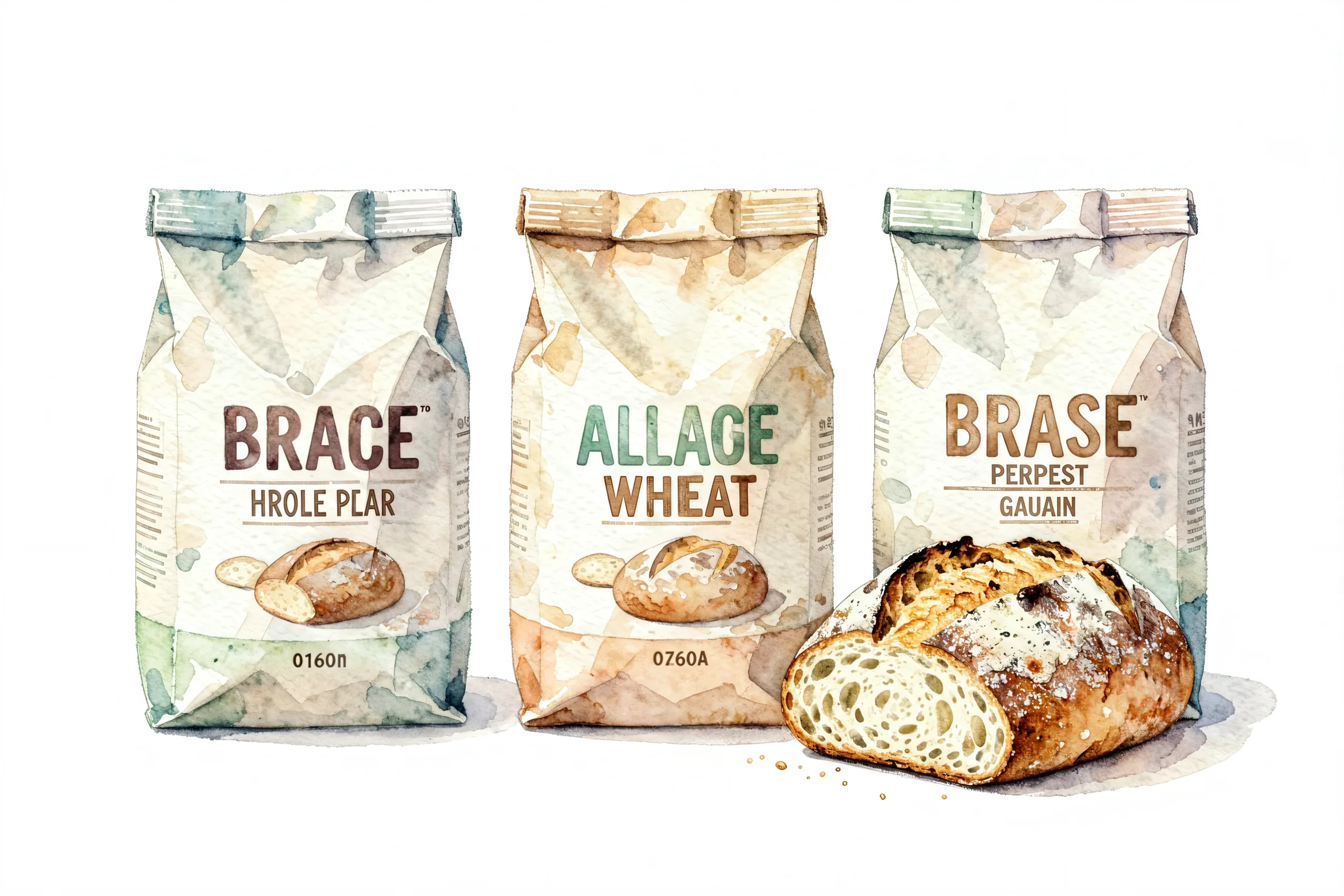
Best Flour for Sourdough: A Complete Guide for Home Bakers
📖 9 min read · Updated July 2026
By SourdoughCalc Team
Walk into a flour aisle and you face 30+ bags of flour. Which one is right for sourdough? The answer depends on what you are baking, your experience level, and what flavor you want. Here is the practical guide.
The Short Answer
For 90% of home sourdough bakers, a good quality bread flour with at least 12% proteinis the right choice. Brands like King Arthur Bread Flour, Bob's Red Mill Artisan Bread Flour, or a local bakery's stone-milled bread flour will all make excellent sourdough. Start with one of these and only deviate when you have a specific goal in mind.
The Four Main Flour Categories
1. Bread Flour (Strong Flour)
Protein: 12-14%. This is the workhorse of sourdough. Higher protein means more gluten, which means better structure, better oven spring, and an open crumb. The flavor is clean and neutral, which lets the wild yeast flavor of the starter shine through. Most artisan bakers exclusively use bread flour. Recommended brands: King Arthur Bread Flour, Bob's Red Mill Artisan Bread Flour, Pillsbury Bread Flour, or any local stone-milled bread flour.
2. All-Purpose Flour
Protein: 10-12%. Lower protein means less gluten, which means denser crumb. All-purpose works for sourdough but produces a tighter, more sandwich-loaf-style result. The texture is softer. It is what most home bakers have in their pantry. If you only have AP, it will work but bread flour is better. For sandwiches, AP is fine. For open crumb boules, bread flour is better.
3. Whole Wheat Flour
Protein: 13-14%, but with bran and germ. Whole wheat adds significant flavor and nutrition. It also absorbs more water than white flour. The standard advice: substitute 10-30% of your bread flour with whole wheat for a flavor boost without losing structure. Going above 50% whole wheat makes the dough harder to work with. King Arthur Whole Wheat Flour and Bob's Red Mill Whole Wheat are reliable.
4. Rye Flour
Protein: 10-12%, but with pentosans. Rye contains pentosans, which absorb huge amounts of water and make the dough sticky. Use 5-20% rye in your sourdough for a deep, complex flavor. Pure rye sourdough is traditional in some European countries but very different from wheat sourdough. Light rye is milder; medium rye is more intense; pumpernickel is intense. Start with 10% if you are new to rye.
Common Blends and Why They Work
Most artisan sourdough uses a blend, not a single flour. The classic blend is 80% bread flour + 20% whole wheat or rye. The bread flour provides gluten structure. The whole wheat or rye provides flavor and nutrition. The result is a balanced loaf with good crumb and complex flavor.
For a more interesting flavor: 70% bread flour + 20% whole wheat + 10% rye. For a softer sandwich loaf: 100% bread flour. For whole grain: 60% bread flour + 30% whole wheat + 10% rye. Experiment to find what you like.
Flour Brand Recommendations by Budget
Budget: Pillsbury Bread Flour or store brand bread flour (around $3-4 for 5 lbs). Works fine for basic sourdough.
Mid-range: King Arthur Bread Flour or Bob's Red Mill Artisan Bread Flour (around $5-7 for 5 lbs). Better quality, more consistent.
Premium: Local stone-milled bread flour from a regional mill (around $8-12 for 5 lbs). Best flavor, supports local businesses, often organic.
Specialty: Italian 00 flour (for pizza-style breads), French Type 55, German spelt. These add character but are not necessary for basic sourdough.
Common Mistakes to Avoid
Using cake flour. Too low protein (7-8%). The dough will not hold its shape and the crumb will be dense. Never use cake flour for sourdough.
Using only whole wheat. Too much bran and germ inhibit gluten development. The dough will be heavy and dense. Always blend whole wheat with bread flour.
Mixing brands without testing. Different brands have different protein levels. When switching, expect a 10% difference in dough hydration. Adjust your water accordingly. Our free calculator handles any flour blend.
The Bottom Line
Buy a good bread flour. Use it. Make great bread. After you have baked 5-10 loaves, experiment with adding 10-20% whole wheat or rye for more complex flavor. The flour aisle at the grocery store is a beginning, not a constraint.