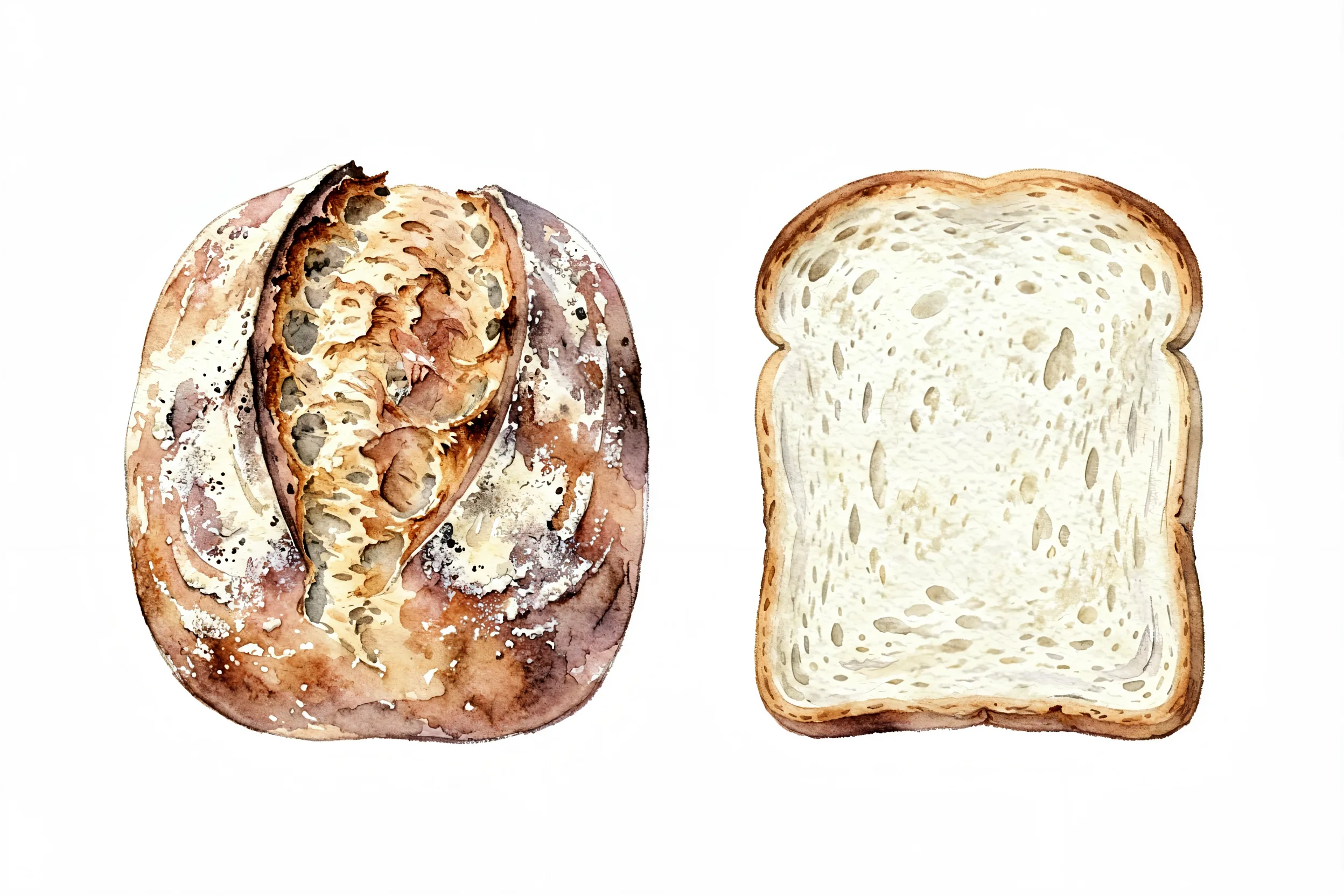
Sourdough vs Regular Bread: What's Different?
📖 8 min read · Updated July 2026
By SourdoughCalc Team
Sourdough has a reputation as the healthier, more digestible bread. Is this reputation deserved, or is it sourdough romanticism? Here is what the science actually says.
The Short Answer
Sourdough is not significantly more nutritious than regular bread in terms of calories, protein, or fiber. The flour is the same. What sourdough does offer isbetter digestibility for some people, a lower glycemic response, more complex flavor, and longer shelf life. Whether these matter to you depends on your goals.
Nutritional Comparison (per 100g of bread)
Regular White Sandwich Bread (commercial)
Calories: 265. Protein: 9g. Carbs: 49g. Fiber: 2.7g. Sugar: 5g. Fat: 3.2g. Sodium: 491mg. Iron: 3.6mg. Fortified with folate and B vitamins.
Homemade Sourdough (whole wheat blend)
Calories: 250-260. Protein: 8-9g. Carbs: 48-50g. Fiber: 3-5g (higher if whole wheat). Sugar: 1-2g (lower). Fat: 2-3g. Sodium: 480-500mg. Iron: 3-4mg. Naturally occurring B vitamins from fermentation.
Where Sourdough Wins
1. Lower Glycemic Index (GI)
Regular white bread: GI around 75. Sourdough: GI around 54-65. The long fermentation breaks down some of the starches into organic acids, slowing glucose absorption. This is genuinely meaningful for blood sugar control, especially for people with insulin resistance or type 2 diabetes. Studies confirm this.
2. Better Digestibility for Some
The wild yeast and bacteria in sourdough pre-digest the gluten and starches, breaking down some of the proteins and carbohydrates before you eat them. This is why many people with mild gluten sensitivity tolerate sourdough better than commercial bread.Important: sourdough is not gluten-free. People with celiac disease cannot eat any wheat.
3. Higher in Minerals (When Made with Whole Wheat)
The long fermentation in sourdough breaks down phytic acid, which normally binds to minerals and prevents absorption. This means more zinc, magnesium, and iron are absorbed from sourdough compared to commercial whole wheat bread. Studies have measured 50-70% more mineral absorption in fermented vs. unfermented grains.
4. Lower Glycemic Response Even with White Flour
Even sourdough made with all-purpose flour has a lower glycemic response than regular bread, because the organic acids produced during fermentation slow gastric emptying. This means you feel fuller longer and have steadier blood sugar after eating sourdough.
5. Better Flavor, Longer Shelf Life
Sourdough has a tangy, complex flavor. Some people prefer it; others prefer simpler breads. The lactic acid in sourdough also acts as a natural preservative, so sourdough stays fresh for 3-5 days compared to 1-2 days for commercial bread. The lactic acid
Where Regular Bread Wins
1. Faster and Easier to Make
Commercial bread is made in 2-3 hours with commercial yeast. Sourdough takes 24-48 hours because the wild yeast is slower. For busy bakers, this is a real cost.
2. More Predictable
Commercial yeast is consistent. Wild sourdough cultures vary in strength depending on flour, temperature, and age. A new starter will be unpredictable for the first 1-2 weeks.
3. Often Fortified
Commercial bread is often fortified with folate, thiamine, and iron. Sourdough has these naturally but in smaller amounts. For most people this is not a concern.
What the Science Does Not Support
The claim that sourdough is "much more nutritious" than regular bread is exaggerated. It is not a weight-loss food. It is not a health food in the conventional sense. It is atraditional, well-made bread with some real but modest benefits. The biggest benefit of homemade sourdough is that you control the ingredients: no preservatives, no added sugar, no seed oils.
The Bottom Line
Sourdough is a great choice if you enjoy making bread, want better digestibility, value complex flavor, or are watching your blood sugar. It is not a magic health food. Make it because you enjoy the process and the result. The "healthier" claim is a nice bonus, not the main reason.
For best results, mix your own blend: 80% bread flour + 20% whole wheat. Use our hydration calculator to dial in the right ratios. The hydration guide explains how water level changes texture and nutrition.
Sourdough vs Regular Bread FAQ
Is sourdough bread healthier than regular bread?
Sourdough is not significantly higher in calories, protein, or fiber, but it can be easier to digest and has a lower glycemic response for many people. It also contains more available minerals when made with whole wheat.
Is sourdough bread gluten-free?
No. Sourdough made from wheat still contains gluten. The fermentation breaks down some gluten proteins, which helps some people with mild sensitivity, but it is not safe for people with celiac disease.
Does sourdough have a lower glycemic index than regular bread?
Yes. Regular white bread has a GI around 75, while sourdough is usually in the 54-65 range because the organic acids from fermentation slow glucose absorption.
Related Reading
- Sourdough Hydration: The Complete Beginner's Guide
- Best Flour for Sourdough: A Complete Guide
- What is Sourdough Hydration?
- Whole Wheat Sourdough: Complete Grain Guide
Sources
- USDA FoodData Central
- Impact of fermentation regime and metabolically defined LAB consortia on sourdough bread nutritional and volatile composition (PubMed)
- Effects of sourdough- or regular-bread fermentation, and phytate reduction on iron bioavailability, absorption, and iron status (PubMed, 2026)
- Mechanistic insights into the impact of ferulic acid on starch digestibility and structural properties (PubMed, 2026)
- Celiac Disease Foundation