Sourdough Banneton: What It Does, Why It Matters, and How to Choose Yours
📖 7 min read · Updated August 2026
By SourdoughCalc Team
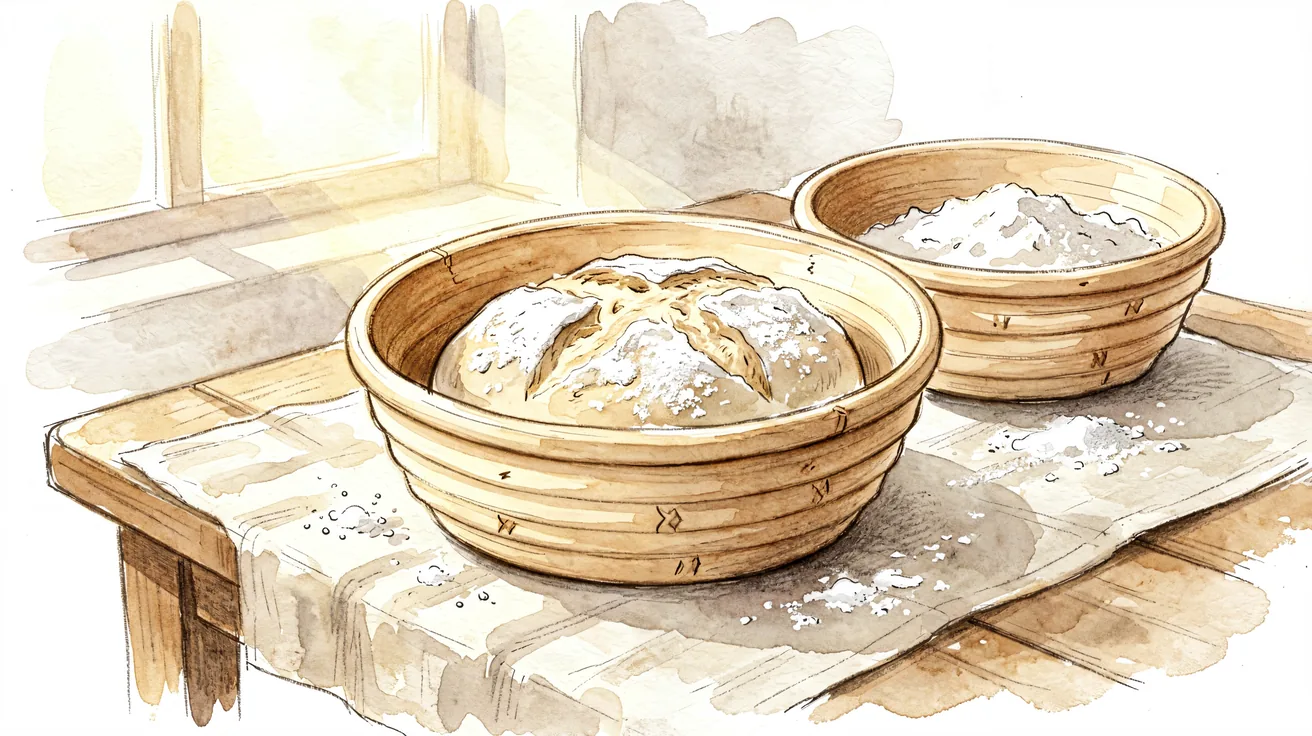
Every recognizable artisan sourdough loaf — the one with the dramatic ridges down the side and the tight, picture-book shape — got those marks from a banneton. A banneton is the proofing basket where your dough spends its final rise. Without one, you can still bake great sourdough, but you will be fighting the dough to hold its shape and you will never get those signature spirals and rings.
A banneton is the second-most-useful sourdough tool after a digital scale, and the only one that costs $20 to $80 and lasts decades.
What a Banneton Actually Does (The Short Version)
A banneton has two jobs. First, it holds your shaped dough in its final shape during the final proof. Second, the woven cane absorbs surface moisture from the dough, which tightens the outer skin of the loaf and lets it hold a higher rise.
The result is the classic boule (round) or bâtard (oval) shape with visible spiral ridges from the basket weave. Skip the banneton and you will get a loaf that spreads sideways during the final proof and flattens out in the oven. The bread will still taste right, but it will not look right.
Two practical effects of a banneton: it lets you cold-retard your shaped dough in the fridge overnight without it sticking or spreading, and it gives you a clean place to flip the dough out onto your baking surface right before scoring.
The Three Materials Compared
1. Cane (Rattan) — the classic choice
Price: $20–35. Most bannetons are made from coiled rattan cane, sometimes called "brotform" in German recipes. The woven pattern imprints the dough with the characteristic concentric rings. Cane absorbs surface moisture, develops a patina over time, and is the material most professional bakeries use. Recommended for 90% of home bakers.
2. Wood (Pulau wood, beech) — premium, decorative
Price: $50–100. Wooden bannetons are typically made from Pulau wood (a tight-grained tropical hardwood). They last longer than cane and do not absorb moisture the same way — the dough needs a bit more flour to release cleanly. Most home bakers who buy wood do so for the look on a kitchen counter, not for the bread-baking performance. Cane is the better tool.
3. Plastic (collapsible) — cheap, easy
Price: $12–25. Plastic proofing baskets with a spring-loaded collapsible side are the budget choice. They are easy to clean, easy to store, and release the dough without flouring. The downside: they do not absorb moisture, so the dough can stick slightly even with flour dusting. Acceptable for occasional baking; not what you want if you bake every week.
Size and Shape: How to Pick
Bannetons come in two shapes — round (boule) and oval (bâtard) — and several sizes. The size you need depends on the dough weight you are baking:
| Dough weight | Banneton size | Shape |
|---|---|---|
| 500–800 g | 8 inch / 20 cm | Round (boule) |
| 800–1200 g | 10 inch / 25 cm | Round (boule) |
| 500–900 g | 9×4 inch oval | Oval (bâtard) |
| 900–1500 g | 11×5 inch oval | Oval (bâtard) |
A 10-inch round banneton is the most versatile size for home bakers. It works for any recipe between 700 g and 1100 g, which covers the standard 500 g flour loaves that the hydration calculator produces.
Prep and Care
A new cane banneton needs a few bakes to develop its patina. For the first 3–5 uses, dust more flour than you think you need. After that, less is required.
The single most important prep step is to use a 50/50 mix of all-purpose flour and rice flour. Rice flour does not absorb into the dough, so the dough releases cleanly even after a 12-hour cold retard. Plain flour alone tends to glue to the dough and tear the surface during the unmold.
After each use, turn the banneton upside down on a wire rack and let it air-dry completely before storing. Trapped moisture is what causes the cane to develop mold or off-odors. Do not bake the banneton, do not soak it, do not run it through the dishwasher.
Periodically, brush out the flour residue with a dry brush. Once a year, you can refresh the cane by lightly misting it with water and leaving it to dry, which re-tensions the fibers. Most quality bannetons last 5–10 years of weekly use.
4 Common Mistakes
1. Not flouring enough. The dough will stick and tear on unmold. Use the 50/50 rice-flour mix and press it firmly into the cane.
2. Putting it in a plastic bag while wet. Mold will grow. Always dry the banneton upside down on a rack before storage.
3. Soaking to "clean" it. Soaking warps the cane, dissolves the rice flour barrier, and makes the next bake a disaster. Dry brushing is enough.
4. Letting the shaped dough sit at room temperature too long before retarding.A long room-temp proof in the banneton means a flat, over-proofed loaf. If you are doing a cold retard, put the dough in the fridge 30 minutes after shaping — do not wait an hour.
Top Picks
All of these are 10-inch round cane bannetons, the most versatile size and shape for home sourdough. They are well-reviewed on Amazon and used by tens of thousands of home bakers.
Best Overall: 10 inch Cane Sourdough Banneton (round) on Amazon
Price: $22–30. Standard spiral weave, well-made, ships flat. The choice for most home bakers.
Best Oval: 9x4 inch Oval Cane Banneton on Amazon
Price: $25–35. Use this if you prefer the bâtard shape, which is the classic French country loaf look.
Best for Beginners on a Budget: Collapsible Plastic Proofing Basket on Amazon
Price: $15–22. Plastic, spring-loaded side, easy to clean. The most affordable way to start baking artisan sourdough and see if the shape matters to you.
Best Premium: Pulau Wood Banneton on Amazon
Price: $70–100. Wood, hand-finished, doubles as a kitchen display. For bakers who care about aesthetics as much as function.
As an Amazon Associate, we earn from qualifying purchases. Prices stay the same for you.
Sourdough Banneton FAQ
Do I really need a banneton?
You can bake sourdough without one. Your loaf will be flatter and less photogenic. If you are baking once a month, skip it. If you are baking weekly, it is worth the $25.
Can I use a regular bowl instead?
Yes. A glass bowl lined with a flour-dusted tea towel will give you roughly the same result as a plastic proofing basket. You will not get the spiral ridges, but the bread will taste the same.
How long does a cane banneton last?
With weekly use and proper drying, 5 to 10 years. The cane darkens and develops a patina but does not lose shape.
Banneton vs brotform — what is the difference?
They are the same thing. "Banneton" is French, "brotform" is German. Both refer to a woven proofing basket for bread.
Sources
- King Arthur Baking: Choosing a Proofing Basket
- The Perfect Loaf: Sourdough Guides
- Tartine Bread by Chad Robertson — shaping and proofing chapter