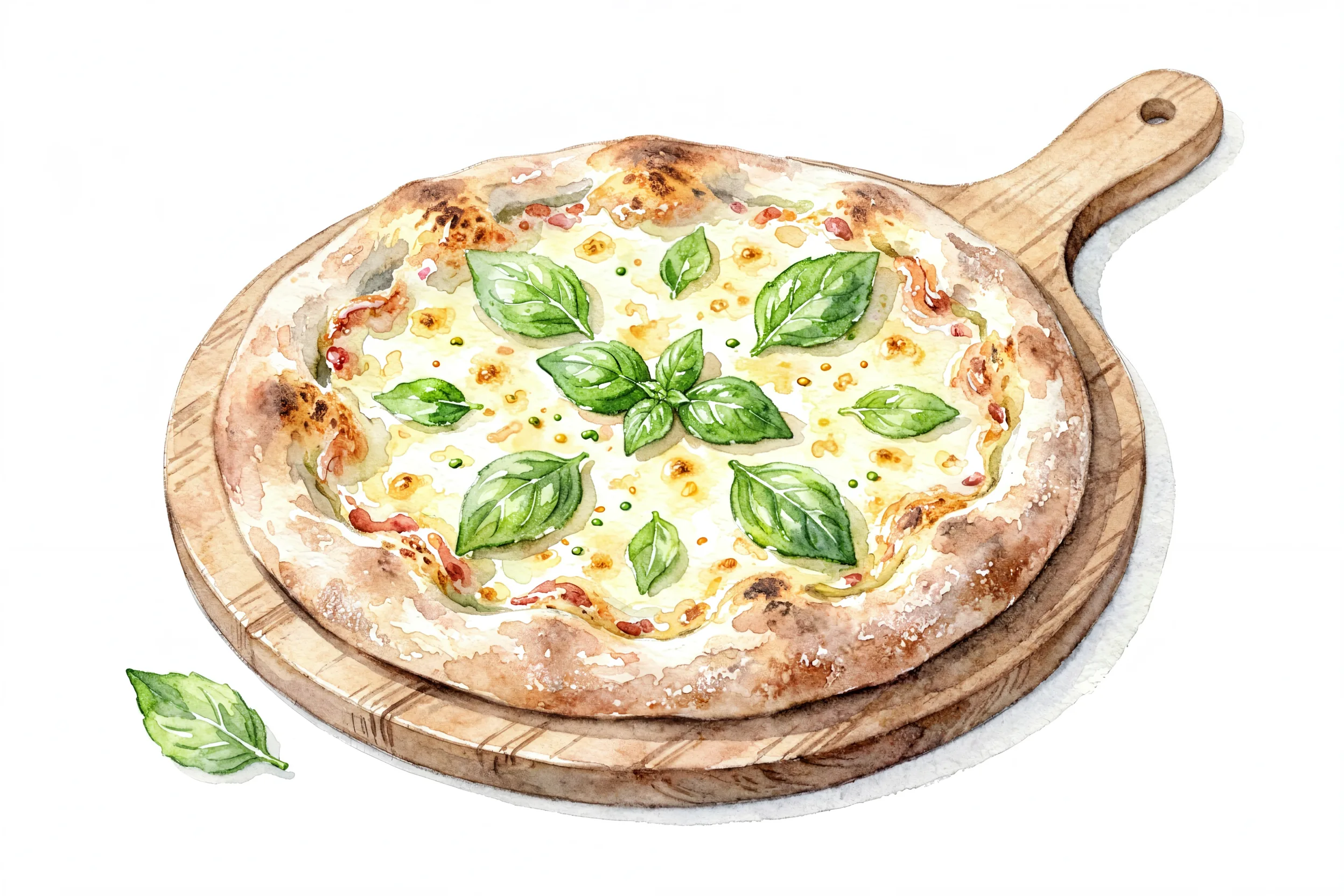
Sourdough Pizza Dough: A Complete Guide for Crispy, Chewy Crust
📖 9 min read · Updated July 2026
By SourdoughCalc Team
If you already keep a sourdough starter, you are 20 minutes away from the best pizza you have ever made at home. Sourdough pizza dough has everything you want: deeper flavor than commercial yeast, a tang that complements tomato and cheese, an open crumb under the cheese, and a crust that shatters when you bite it but stays chewy in the middle. This guide gives you the recipe, the timeline, and every fix for the common problems.
Why Does Sourdough Make Better Pizza Dough?
Commercial yeast gives you rise. Sourdough starter gives you flavor and textureat the same time. The wild yeast and bacteria in your starter produce lactic and acetic acid during fermentation. These acids do three things:
- Develop gluten faster, so you can mix and stretch without overworking the dough.
- Break down starches into simpler sugars that feed the Maillard reaction, giving you those dark, blistered spots on the crust.
- Create complex flavor: tangy, slightly funky, and never neutral like commercial yeast.
The flavor difference is not subtle. Once you make pizza with sourdough, you will not go back to dry-yeast dough. The texture difference is even bigger: a long, cold ferment develops the open crumb that makes Neapolitan pizza so addictive.
What Is the Best Sourdough Pizza Dough Recipe?
This is a 65% hydration dough. Lower than bread because pizza needs to hold its shape when stretched and cooked at high heat. Adjust water up to 70% if you prefer a thinner, more foldable crust.
Baker's percentages:
- Flour (bread or 00): 100%
- Water: 65%
- Active sourdough starter: 20%
- Salt: 2.5%
- Olive oil: 2% (optional, for tenderness and flavor)
For 1000g flour (4 pizzas):
- Bread flour or 00 flour: 1000g
- Water (warm, 80F): 650g
- Active sourdough starter: 200g
- Sea salt or kosher salt: 25g
- Olive oil: 20g
Use our free hydration calculator if you want to scale this recipe up or down. It handles the math so you can focus on the baking.
How Do You Make Sourdough Pizza Dough?
Step 1: Mix (5 minutes)
Dissolve the salt in the water. Add the starter and mix with your hands until it breaks up. Add the flour and mix until no dry flour remains. The dough will look shaggy and rough. Cover and let it rest for 20 minutes (this is the autolyse).
Step 2: Bulk Fermentation (4-6 hours at room temp)
Every 30 minutes for the first 2 hours, do one set of stretch and folds: wet your hands, grab one side of the dough, stretch it up until you feel resistance, and fold it over the top. Rotate the bowl a quarter turn and repeat. Four folds per set. After 4 sets (2 hours), let the dough rest undisturbed for another 2-4 hours. It should rise by 50-75% and feel light and pillowy when poked.
Step 3: Cold Ferment (24-72 hours in fridge)
Divide the dough into 4 equal balls (250g each). Round each ball tightly and place in a sealed container lightly oiled. Refrigerate for at least 24 hours, up to 3 days. The cold ferment is where the flavor magic happens: slow fermentation develops complex tang and makes the dough easier to stretch.
Take the dough out of the fridge 2-3 hours before baking so it warms up to room temperature. Cold dough will not stretch properly and will spring back.
Step 4: Shape (2-3 minutes per pizza)
On a lightly floured surface, press the dough ball out with your fingertips, leaving 1 inch of border untouched. Do not use a rolling pin: it compresses the air bubbles you spent 30 hours developing. Pick the dough up and stretch it gently over your knuckles, letting gravity do the work. Place on a semolina-dusted pizza peel or parchment paper.
Step 5: Top and Bake (5-7 minutes)
Add sauce, cheese, and toppings. For a home oven, preheat a pizza stone or steel on the top rack at 500F (or as hot as your oven goes) for at least 45 minutes. Slide the pizza onto the stone and bake 5-7 minutes until the crust is blistered and the cheese is bubbly with brown spots.
For best results, use the broiler for the last 60 seconds to char the top without overcooking the bottom.
How Do You Fix Sourdough Pizza Problems?
Dough springs back when I stretch it
Cause: Gluten is too tight. Either the dough is too cold, or it has not fermented long enough.
Fix: Let the dough sit at room temperature for at least 30 minutes before stretching. If it still springs back, let it rest on the counter for another 15 minutes and try again. Stretching in stages (rest 5 minutes between each) also helps.
Crust is tough and chewy, not crispy
Cause: Either the oven is not hot enough, or the hydration is too high for your flour.
Fix: Preheat your oven for at least 45 minutes at maximum temperature. If your oven only goes to 450F, use the broiler for the last 2 minutes to mimic the high top heat of a pizza oven. Reduce hydration by 5% if you want a crunchier crust.
Crust tastes too sour
Cause: Over-fermented. Your starter is very active, or you left the dough in the fridge too long.
Fix: Reduce cold ferment time to 24 hours. Use a less ripe starter (peak rise, not falling). If your starter is very acidic, feed it more often and use it at a younger stage.
Bottom burns before top is done
Cause: Pizza stone too close to the bottom heating element.
Fix: Move the stone to the top rack. Or use a pizza steel, which transfers heat faster and cooks the bottom in less time.
What Equipment Do You Need for Sourdough Pizza?
You can make great sourdough pizza with a regular baking sheet. But if you bake pizza often, two upgrades are worth it:
- Pizza stone or steel. A cordierite stone or 1/4-inch steel plate stores heat and transfers it to the dough on contact, giving you the bottom char that defines great pizza. Preheat for at least 45 minutes.
- Infrared thermometer. Verify your stone is actually 500F+ before baking. Many home ovens run 50F cooler than the dial says.
FAQ
Can I use sourdough discard instead of active starter?
Yes, but the dough will not rise as much and will taste flatter. Discard has the bacteria but very little active yeast. For best results, use starter that has peaked (just started to fall). If you only have discard, add 1/4 tsp of commercial yeast per 500g flour as a backup.
How long does the dough last in the fridge?
Up to 5 days, but flavor peaks around 48-72 hours. After day 4, the dough gets noticeably more sour and the gluten structure starts to break down. Use it or freeze it.
Can I freeze the dough?
Yes. After the cold ferment, wrap each dough ball tightly in plastic wrap and freeze for up to 3 months. Thaw in the fridge overnight, then bring to room temperature 2-3 hours before shaping.
What is 00 flour and do I need it?
00 (doppio zero) is an Italian flour finely ground from soft wheat. It makes a more tender, stretchable dough than bread flour. You do not need it: bread flour works great. But if you want truly Neapolitan-style pizza, 00 is the traditional choice.
Is Sourdough Pizza Worth Making at Home?
Sourdough pizza is one of those rare recipes that is genuinely easier than the commercial-yeast version. You mix, you wait, you bake. The starter does all the hard work of flavor development while you go about your day. Once you have it dialed in, this becomes your weekly pizza recipe. Our free hydration calculator handles any scaling or flour swap.
References
- Reinhart, P. (2010). The Bread Baker's Apprentice: Mastering the Art of Extraordinary Bread. Ten Speed Press.
- Forkish, K. (2012). Flour Water Salt Yeast: The Fundamentals of Artisan Bread and Pizza. Chronicle Books.
- King Arthur Baking. Sourdough Guide. Accessed August 2026.
- Serious Eats. Serious Eats: Pizza Science and Recipes. Accessed August 2026.
- Leo, M. Sourdough Pizza Dough. The Perfect Loaf. Accessed August 2026.
- Robertson, C. (2013). Tartine Bread. Chronicle Books.
The recipe and method in this article are based on standard sourdough baking practices refined from these sources and adapted for home bakers. Adjust flour and timing to your specific starter, flour brand, and ambient conditions.