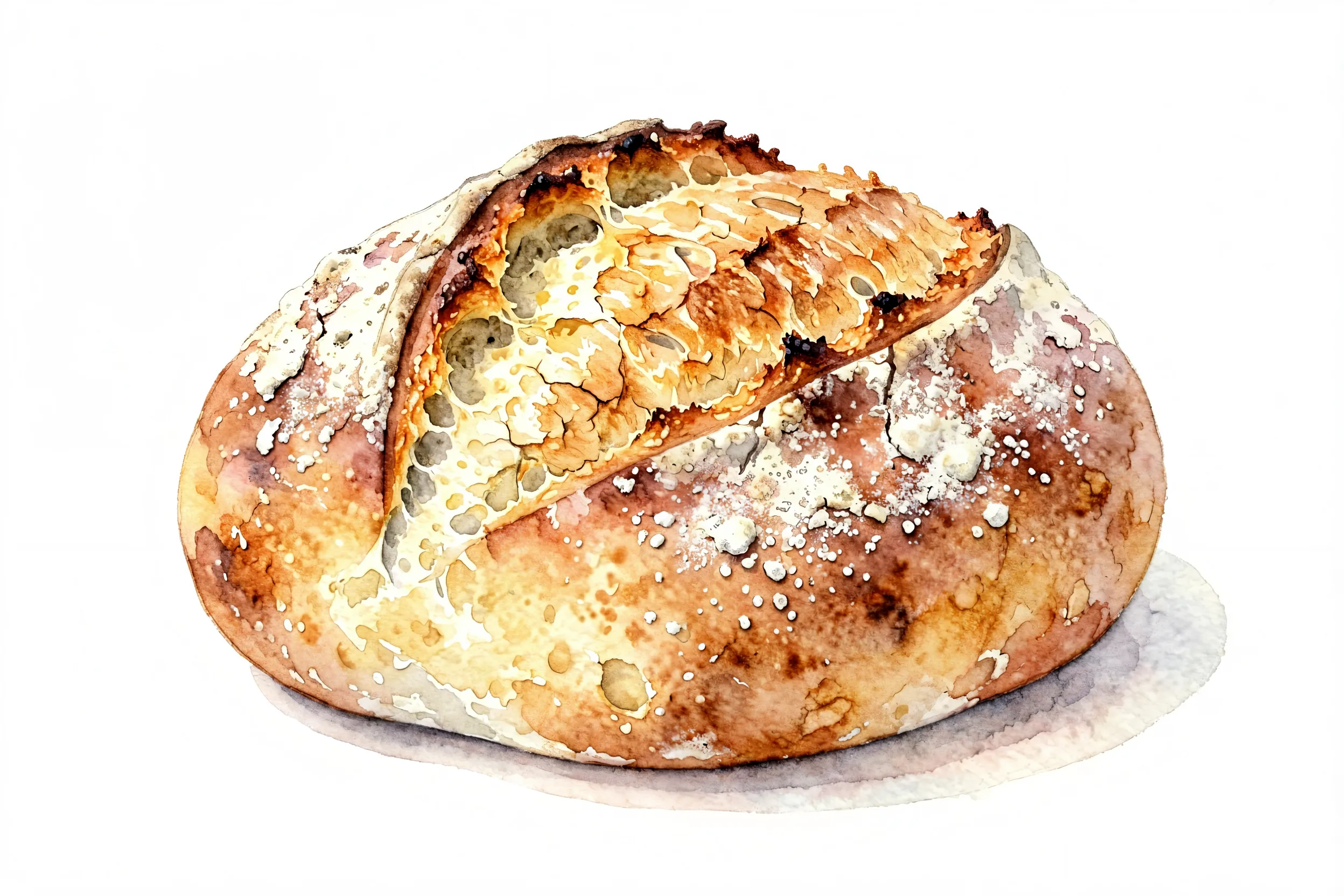
Sourdough Crust: 7 Tips for a Bakery-Style Crackle
📖 7 min read · Updated July 2026
By SourdoughCalc Team
Sourdough's signature crackling crust is what makes it special. Achieving it is not magic, it is technique. Here are the seven things that professional bakers do that home bakers often skip. Master these and your bread will sound like a drum when you tap it.
7 Tips at a Glance
- Bake in a Dutch oven or heavy lidded pot.
- Add steam if you are not using a lid.
- Score deep and confidently at a 30-45 degree angle.
- Bake hot: 450-500°F.
- Preheat thoroughly for at least 45 minutes.
- Cool completely for 1-2 hours before slicing.
- Push hydration higher for extra crackle.
Why Is My Sourdough Crust Soft or Doughy?
| Symptom | Likely cause | Fix |
|---|---|---|
| Soft, pale crust | Oven too cool or no steam | Preheat 45 minutes and bake at 450-500°F with steam |
| Doughy, gummy crust | Cut too early | Cool 1-2 hours on a wire rack |
| Sealed score, tight crumb | Score too shallow | Cut 1/2-3/4 inch deep at 30-45 degrees |
| Thick, chewy crust | Low hydration | Raise hydration by 5% toward 78%+ |
Why Bake in a Dutch Oven?
This is the single biggest upgrade you can make. A Dutch oven traps the steam that the bread releases during baking, which keeps the crust soft and pliable during oven spring. This gives the bread time to fully expand before the crust hardens. After 20 minutes, remove the lid and the crust will crisp up in the dry oven heat. Result: thick, crackly crust with maximum oven spring.
If you don't have a Dutch oven, use any heavy oven-safe pot with a lid: Pyrex, cast iron combo cooker, ceramic baker. Even a metal bowl with foil over the top works in a pinch.
How Do You Add Steam Without a Dutch Oven?
Place a metal pan or cast iron skillet on the bottom rack of the oven. When you put the bread in, pour 1 cup of boiling water into the pan and quickly close the door. The steam fills the oven, keeps the crust soft for the first 10-15 minutes, then dissipates. You can also throw 4-5 ice cubes onto the hot pan for an even more dramatic burst of steam.
How Deep Should You Score Sourdough?
A deep, confident score is essential. Use a sharp lame or razor blade, and cut at a30-45 degree angle, 1/2 to 3/4 inch deep. A single cut at the longest axis is the classic baker's mark. A cut that's too shallow will not allow the bread to expand and will seal shut in the oven. Hesitation leads to jagged edges. Cut decisively.
What Temperature Should You Bake Sourdough?
Crust forms at high temperatures. 450-500°F is the standard. Lower temperatures produce a soft, pale crust. Higher temperatures produce a deep, dark, crackly crust. Don't be afraid of dark. The interior temperature is what matters for doneness, and the crust color is purely aesthetic. Darker crust = more flavor.
How Long Should You Preheat the Oven?
The oven needs to be thoroughly pre-heated for at least 45 minutes. A Dutch oven or pizza stone needs this time to fully saturate with heat. If you put bread into a lukewarm oven, you will lose at least 30% of your oven spring. Use an oven thermometer to verify the actual temperature. Most home ovens are 25-50°F off from the dial.
How Long Must the Bread Cool?
Sourdough continues to bake internally as it cools. The interior is still setting when you take it out. Cut too early and the crumb will be gummy and the crust will feel doughy. Wait at least 1 hour, ideally 2 hours, on a wire rack before cutting. Yes, this is the hardest part.
Does Hydration Affect the Crust?
Higher hydration doughs (78%+) produce thinner, more crackly crusts because the higher water content evaporates more during baking, creating more steam inside the crust. If you want extra crackle, push your hydration up by 5%. Our hydration calculator makes this easy.
What If You Only Do One Thing?
If you do only one thing, buy a Dutch oven. If you do two, score deeper. If you do three, bake at 500°F. If you do all seven, your bread will sound like a drum and crackle when you cut it. That is the sourdough experience.
Crust FAQ
Why is my sourdough crust soft instead of crackly?
A soft crust usually means not enough steam during the first 15 minutes, an oven that is too cool, or bread cut before it finished cooling. Bake hotter with steam, then cool for at least an hour.
Does higher hydration make a crispier crust?
Yes. Doughs at 78% hydration or higher produce thinner, more crackly crusts because more water evaporates during baking and creates steam inside the crust.
How long should sourdough cool before cutting?
Wait at least 1 hour, ideally 2, on a wire rack. Cutting early makes the crumb gummy and the crust feel doughy.