Sourdough Bulk Fermentation: A Complete Guide to Timing and Temperature
📖 9 min read · Updated July 2026
By SourdoughCalc Team
Bulk fermentation is the most critical and most misunderstood step in sourdough. Get it right and your bread is light, open, and tangy. Get it wrong and your bread is dense, sour, or deflated. Here is how to know when to end bulk and shape.
What Bulk Fermentation Does
During bulk fermentation, the wild yeast and bacteria in your starter consume the flour's sugars, producing carbon dioxide (which inflates the dough) and organic acids (which give the bread its flavor). Enzymes also break down some of the gluten and starches, which creates the bread's open crumb and tender texture.
The Two Variables That Matter
1. Temperature
Temperature is the most important factor. Warmer dough ferments faster, cooler dough ferments slower. A dough at 75°F might bulk for 3-4 hours, while the same dough at 65°F might need 5-7 hours.
2. Time
Time alone is not the right way to judge readiness. Dough at different temperatures ferments at different rates. Instead of a clock, watch for visual cues.
Visual Cues for Readiness
Look for these 5 signs that bulk fermentation is done:
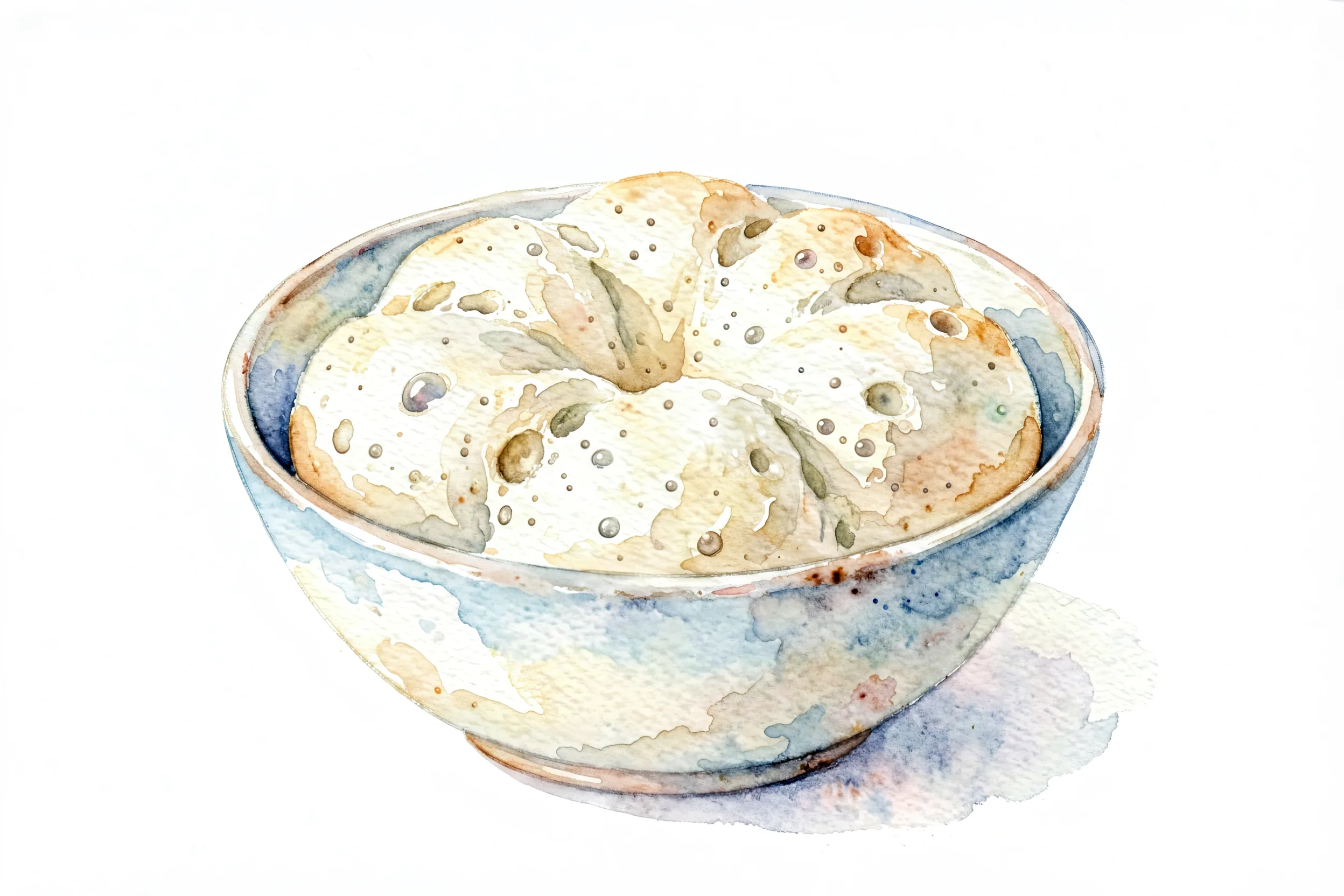
- 50-75% rise: The dough has grown to about 1.5-1.75x its original volume. Not 100% doubled. Bulk is done at the first signs of significant rise, not when the dough has fully doubled.
- Domed top: The top of the dough has rounded upward, not flat. A flat or concave surface means the dough is deflated or over-proofed.
- Bubbles on sides and surface: You will see irregular bubbles, especially on the sides of the bowl. These are the CO2 pockets produced by the yeast.
- Jiggle test: Gently shake the bowl. The dough should jiggle like jelly. If it holds its shape, it is under-proofed. If it collapses, it is over-proofed.
- Aromatic: The dough smells yeasty and slightly tangy, but not sharp vinegar. If it smells like alcohol, it is over-proofed.
Temperature Reference
Cool Environment (65-68°F / 18-20°C)
Bulk time: 4-6 hours. Use for slow, complex flavor development. Best in winter or in homes without heating.
Room Temperature (70-74°F / 21-23°C)
Bulk time: 3-4 hours. Standard timing for most sourdough. Most home bakers fall in this range.
Warm Environment (75-80°F / 24-27°C)
Bulk time: 2-3 hours. Watch carefully. The dough ferments fast at this temperature and can easily over-proof. Summer baking in warm homes.
Bulk Fermentation at a Glance
| Temperature | Expected bulk time | Best for |
|---|---|---|
| 65-68°F / 18-20°C | 4-6 hours | Complex flavor and winter kitchens |
| 70-74°F / 21-23°C | 3-4 hours | Standard sourdough schedules |
| 75-80°F / 24-27°C | 2-3 hours | Fast bakes with careful watching |
| 38°F / 3°C fridge | 12-16 hours | Overnight cold retard and scheduling |
Adjusting Your Schedule
To make bulk end at a specific time, work backward:
- Want to bake at 7 PM? End bulk at 4 PM. Mix at noon. Aim for 4-5 hours bulk at 70-74°F.
- Want to bake in the morning? Mix the night before, bulk overnight in the fridge at 38°F for 12-16 hours. This is the cold retard method.
- Want flexibility? Mix in the morning, bulk during the day at room temp, shape in the evening, retard overnight, bake next morning.
Common Mistakes
Cutting bulk too short: The dough is dense and the crumb is tight. The flavor is flat because fermentation is incomplete.
Cutting bulk too long: The dough collapses when shaped. The flavor is sharp and vinegar-like. The crust forms poorly. Total loss.
Ignoring temperature: The dough behaves differently in summer than in winter. Use the visual cues, not the clock.
Tracking Bulk with a Notes App
After 10 bakes, you will start to know your dough. But before that, keep a simple log: room temp, hydration, bulk start time, bulk end time, rise percentage, final result. Within 10 bakes, you will have a dataset that helps you predict. Our hydration calculator helps with the hydration part of the equation.
Bulk Fermentation FAQ
How long should sourdough bulk fermentation take?
At 70-74°F expect 3-4 hours, at 65-68°F allow 4-6 hours, and at 75-80°F plan for 2-3 hours. Judge readiness by visual cues rather than the clock.
What temperature is best for bulk fermentation?
70-74°F is the sweet spot for most home bakers: flavorful but predictable. Warmer dough ferments faster, while cooler dough develops more acidity.
Should bulk fermentation happen in the fridge?
Cold bulk fermentation, also called cold retard, slows the dough dramatically so the same step can take 12-16 hours at 38°F. It is a great scheduling tool and builds flavor.
Related Reading
- Sourdough Hydration: The Complete Beginner's Guide
- Sourdough Schedule: A 24-Hour Timeline
- How to Shape a Sourdough Boule
- 5 Common Sourdough Mistakes and How to Fix Them