Best Sourdough Proofing Box: When You Need One and How to Choose
📖 7 min read · Updated August 2026
By SourdoughCalc Team
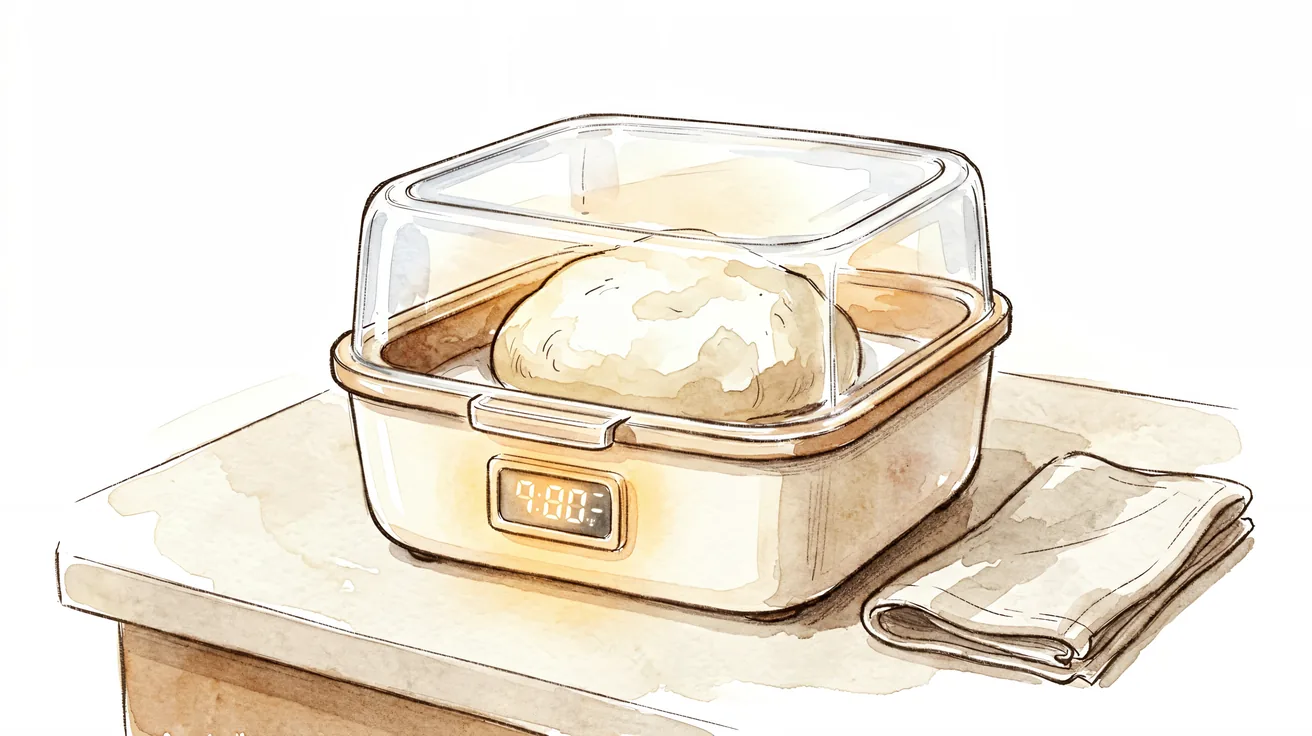
A proofing box is a temperature-controlled container that holds your dough at a steady warmth while it ferments. If your kitchen sits between 68 and 75 degrees year-round, you probably do not need one. If your kitchen drops to 60 in winter or climbs to 80 in summer — or if you want predictable bulk-fermentation timing regardless of season — a proofing box pays for itself in saved frustration.
For most home bakers, this is the third purchase after a digital scale and a banneton. Skip it for the first six months of baking. Get it once you are baking weekly and tired of dough that takes 5 hours in July and 11 hours in January.
What a Proofing Box Actually Does
Sourdough fermentation is driven by wild yeast and lactobacilli. Both work faster at warmer temperatures and slower at colder. At 65 degrees Fahrenheit, your bulk takes 8 to 10 hours. At 78, it takes 4 to 5. The peak of activity for most starter cultures is around 78 to 82 degrees. If your kitchen is 65, you will under-proof. If your kitchen is 85, you will over-proof before you realize it.
A proofing box solves this by holding your dough at whatever temperature you set, regardless of what your kitchen is doing. The most popular home model, the Brød & Taylor Folding Proofer, holds 1 to 3 loaves at 70 to 95 degrees F with adjustable humidity.
Note: a proofing box is different from a banneton. A banneton is the woven basket that gives your dough its final shape during the last hour of proofing. A proofing box is the temperature-controlled environment for the 4 to 10 hours of bulk fermentation. You do not choose between them. You can have both.
Do You Actually Need One?
If your kitchen is between 68 and 75 degrees year-round and you can flex your baking schedule with the seasons, you do not. You can put the dough in a cool corner, watch the bulk visually, and adjust the starter percentage to speed up or slow down fermentation.
You probably do need one if:
- You bake at the same time every day, and you want predictable timing regardless of season.
- Your kitchen is below 65 in winter or above 80 in summer.
- You bake multiple loaves per week and bulk timing is the bottleneck in your schedule.
- You do a long cold retard and want the dough at exactly 38 to 40 degrees, not whatever your fridge happens to be.
The Three Main Options
1. Folding Proofer (electric, $80 to $200)
A countertop electric box with a thermostat. The Brød & Taylor is the most common. It folds flat for storage. The Brod & Taylor Proofer holds up to 3 loaves and includes a humidity tray. Most bakers who buy one use it 3 to 5 times a week and consider it the single biggest quality-of-life upgrade after a scale.
2. Heating Mat + Cooler (DIY, $30 to $60)
A reptile-style heating mat, a cheap foam cooler, and a thermometer. The mat holds temperature within 2 to 3 degrees of your set point. The cooler insulates. Total cost is $30 to $60 and you can fit a large dough. The downsides: less polished, no humidity control, and you have to wire a thermostat yourself.
3. Oven with the Light On (free, but limited)
The pilot light in some ovens gives off enough heat to keep dough at 75 to 80 degrees. This works for occasional baking but is unpredictable across oven models and tends to dry out the dough surface. Cover the dough with a damp towel if you try this.
How to Use It (or Any Warm Spot)
For a typical 75 percent hydration loaf at 500 grams of flour, target a dough temperature of 76 to 80 degrees during bulk fermentation. This usually means 4 to 5 hours at room temperature or 3 to 4 hours in a 78-degree proofing box.
Three common mistakes:
1. Going too hot. A proofing box at 90 degrees will ferment your dough in 2 hours but produce a gummy, over-proofed crumb. Stick to 75 to 82 for most loaves.
2. Forgetting humidity. A dry environment forms a skin on the dough that cracks during baking. Put a small dish of water in the box, or spritz the dough lightly before closing.
3. Not checking the actual dough. A proofing box accelerates the time, but you still go by visual cues. The dough is ready when it has grown about 50 to 75 percent and shows bubbles on the surface.
Top Picks
Four options cover the full range from budget DIY to premium commercial. The table below compares them side by side so you can pick the right one for your kitchen and budget.
| Option | Price | Capacity | Temp Range | Humidity | Best For |
|---|---|---|---|---|---|
| Best Overall: Brød & Taylor Folding Proofer | $90-$110 | 1-3 loaves | 70-95°F | Yes | Home bakers wanting one solid proofer |
| Best Premium: Brød & Taylor Proofer (large) | $150-$200 | 3-5 loaves | 70-95°F | Yes | Multi-loaf weekly bakers |
| Best DIY: Reptile Heat Mat + Cooler | $25-$50 | Any size | ~75°F fixed | DIY (add tray) | Budget bakers willing to DIY |
| Best Budget w/ Humidity: Brød & Taylor Sourdough Home | $80-$100 | 1-2 loaves | 70-95°F | Yes (tray) | Entry-level proofer |
Best Overall: Brød & Taylor Folding Proofer
Folds flat for storage, holds 1-3 loaves, temperature and humidity control. The standard for home bakers.
Best Premium: Brød & Taylor Proofer (large)
Larger capacity, professional build, last 10+ years. For bakers baking multiple loaves every week.
Best DIY: Reptile Heating Mat + Foam Cooler
Heats within 2-3°F of set point, fits any dough size. Less polished than a real proofer, but the same physics.
Best Budget w/ Humidity: Brød & Taylor Sourdough Home
Smaller, includes humidity tray, designed specifically for sourdough. Best entry-level proofer.
As an Amazon Associate, we earn from qualifying purchases. Prices stay the same for you.
Sourdough Proofing Box FAQ
Is a proofing box the same as a proofing drawer?
No. A proofing drawer is a feature in some ovens that holds low temperature for proofing. A proofing box is a separate countertop unit. They do the same job, but a proofing box is portable and works in any kitchen.
What temperature should I proof sourdough at?
75 to 80 degrees Fahrenheit is the sweet spot. Lower (68 to 72) for slower, more flavor-developed loaves. Higher (82+) is risky and can over-proof quickly.
Can I use an Instant Pot as a proofing box?
Yes, on the yogurt setting. It is small, holds one loaf, and the temperature control is decent. Less convenient than a real proofer for regular baking.
Does a proofing box help with the final proof only?
No. Most bakers use a proofing box for the bulk fermentation, which is the 4 to 8 hours when temperature control matters most. The final proof is shorter and can happen at room temperature or in the fridge.