Crusty Sourdough Bread Recipe: Crackling Crust, Step by Step
📖 10 min read · Updated August 2026
By SourdoughCalc Team
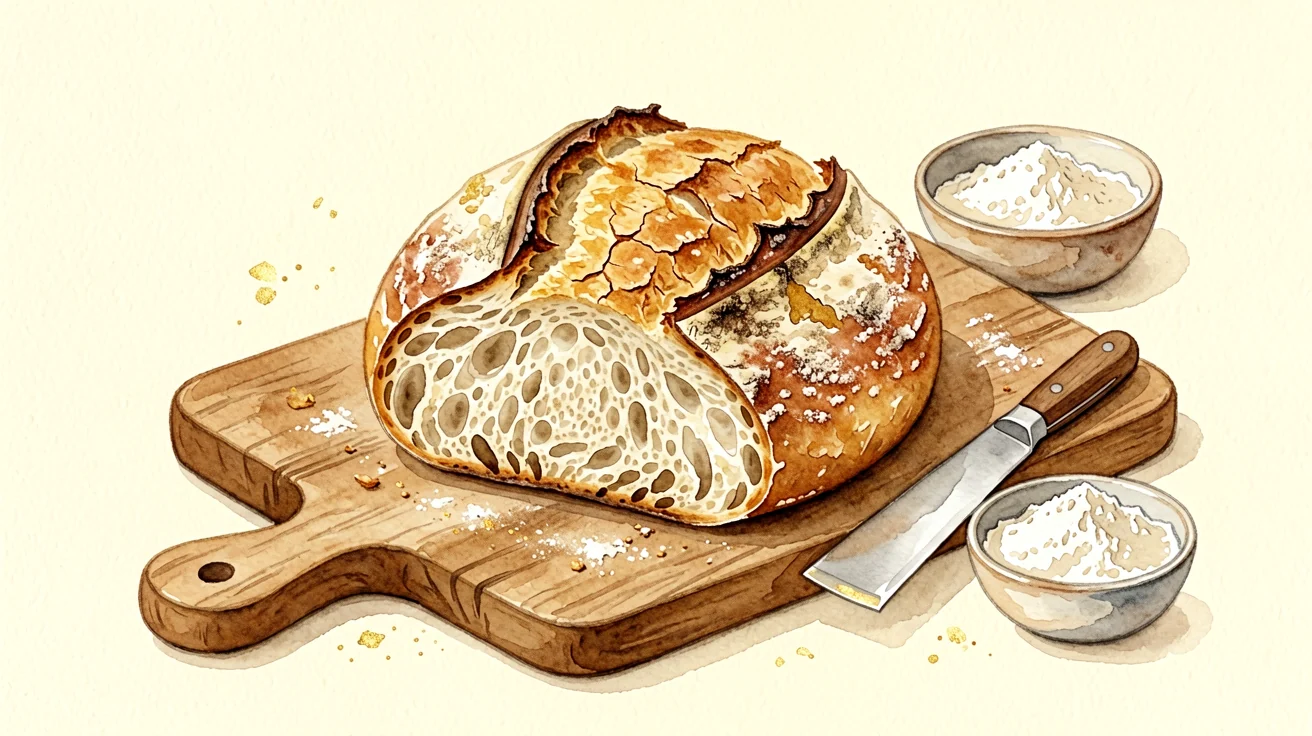
A great sourdough loaf is equal parts open crumb and loud, shattering crust. This recipe does both: a 75% hydration dough that is easy to shape, baked hot with steam so the crust crackles as it cools. Mix in the morning, cold proof overnight, and bake the next day.
What You Need
- Bread flour: 500g
- Water: 375g (75% hydration)
- Ripe sourdough starter: 100g (20%)
- Sea salt: 10g (2%)
A high-protein bread flour gives the strongest crust and the tallest oven spring. If you want to experiment with the ratio, our free hydration calculator does the math for you.
The Schedule
8:00 AM mix → 8:45 AM add starter and salt → 9:00-10:30 AM stretch and folds → 10:30 AM-3:00 PM bulk ferment → 3:30 PM shape → overnight cold proof → next morning bake. Adjust to your kitchen: cooler kitchens need a longer bulk, warmer ones a shorter one.
How to Mix
Combine the flour and water, cover, and rest for 45 minutes (the autolyse). Then add the starter and salt and squeeze everything together until no dry bits remain. The dough will look shaggy and sticky — that is normal.
How to Build Strength
Do four sets of stretch and folds about 30 minutes apart. Wet your hand, grab one side of the dough, stretch it up and over, and rotate the bowl. Each set makes the dough smoother and more elastic. Want a deeper guide? See our bulk fermentation guide.
How to Shape and Cold Proof
Turn the dough onto a lightly floured surface, form a tight round or bâtard, and place it seam-side up in a floured banneton. Refrigerate for 8-16 hours. The long cold proof deepens the flavor and makes the crust bake up crispier.
How to Get the Crackling Crust
The crust is all about steam and heat. Preheat a Dutch oven at 500°F for 45 minutes. Score the dough with one swift cut, lower it in, and bake covered for 20 minutes so the steam keeps the crust pliable while the loaf rises. Remove the lid, drop to 450°F, and bake 20-25 minutes more until deeply browned.
The real magic happens when it cools: the hot, dry crust contracts and cracks into that shattering texture. Let it cool completely on a wire rack for at least 1 hour before slicing. For more on this, read our 7 tips for a crispy crust.
Tools Worth Having for a Crusty Loaf
A few things make the crust dramatically better. We link to the equipment we actually use.
Cast Iron Dutch Oven on Amazon — the easiest way to trap steam and get oven spring. A 5-quart lidded one fits a standard 500g loaf.
Baker's Lame (Scoring Tool) on Amazon — a sharp blade makes a clean 1/4 inch cut that opens into a big ear.
Round Banneton on Amazon — holds the shaped loaf and adds those classic ridges.
High-Protein Bread Flour on Amazon — more protein means a stronger crust and taller rise.
As an Amazon Associate, we earn from qualifying purchases. Prices stay the same for you.
Crusty Sourdough FAQ
What makes sourdough crust crackly?
Steam during the first 15 minutes of baking plus a hot oven. The steam keeps the surface flexible while the loaf expands, then the crust dries and shatters as it cools.
What is the best hydration for a crusty sourdough loaf?
75-80% hydration gives a thin, crackly crust and an open crumb. Higher hydration also means a harder dough to shape, so 75% is a good starting point.
Do I need a Dutch oven for a crusty crust?
A Dutch oven is the easiest way to trap steam and get oven spring, but you can also use a covered cast iron skillet, a baking stone with a steam pan, or even an inverted roasting pan.
Why is my sourdough crust soft instead of crispy?
Usually not enough steam, an oven that is too cool, or slicing the bread while it is still warm. Bake hotter with steam and let the loaf cool fully before cutting.